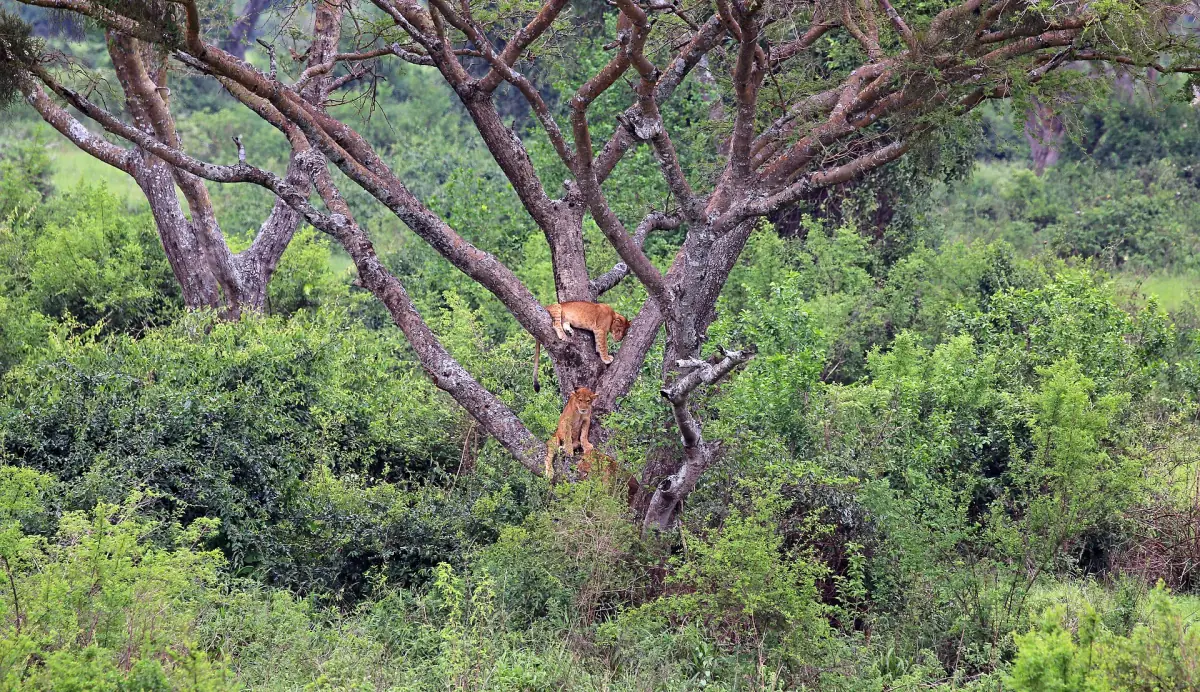
The Ishasha sector and its tree climbing lions
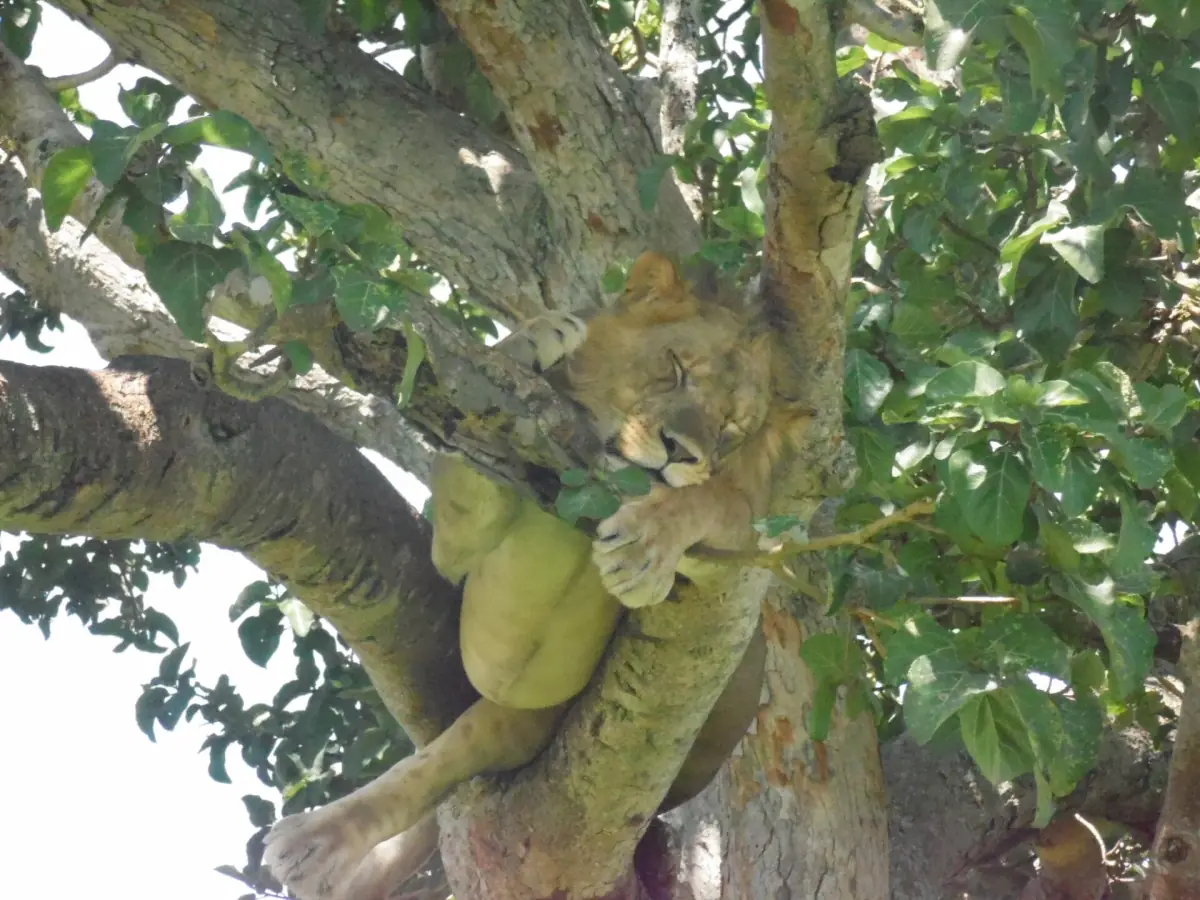
Ishasha is the southern sector of Queen Elizabeth National Park in western Uganda, close to the border with the DR Congo. Lions rest on fig trees here, and that is why most visitors drive south. The behaviour is real, but it is not a show with a timetable. Not every lion sits in a tree, and the lions you look for may be in the grass on the day you come.
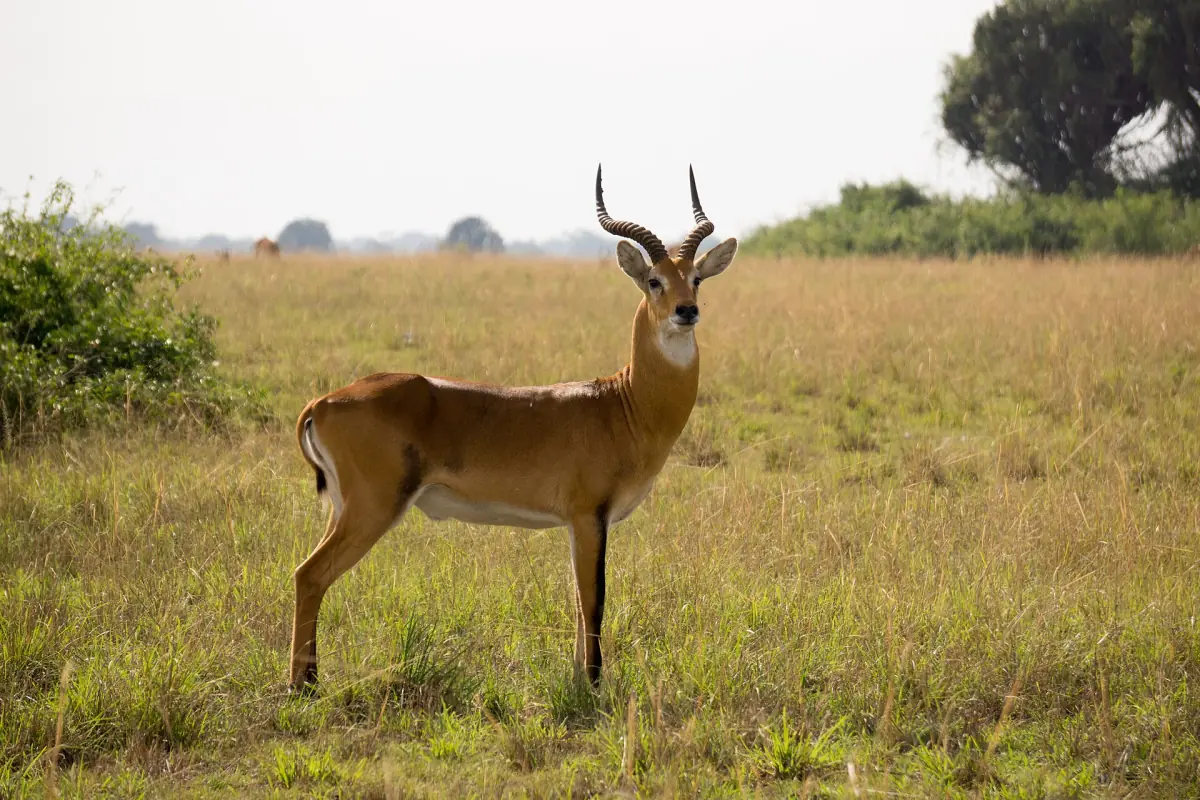
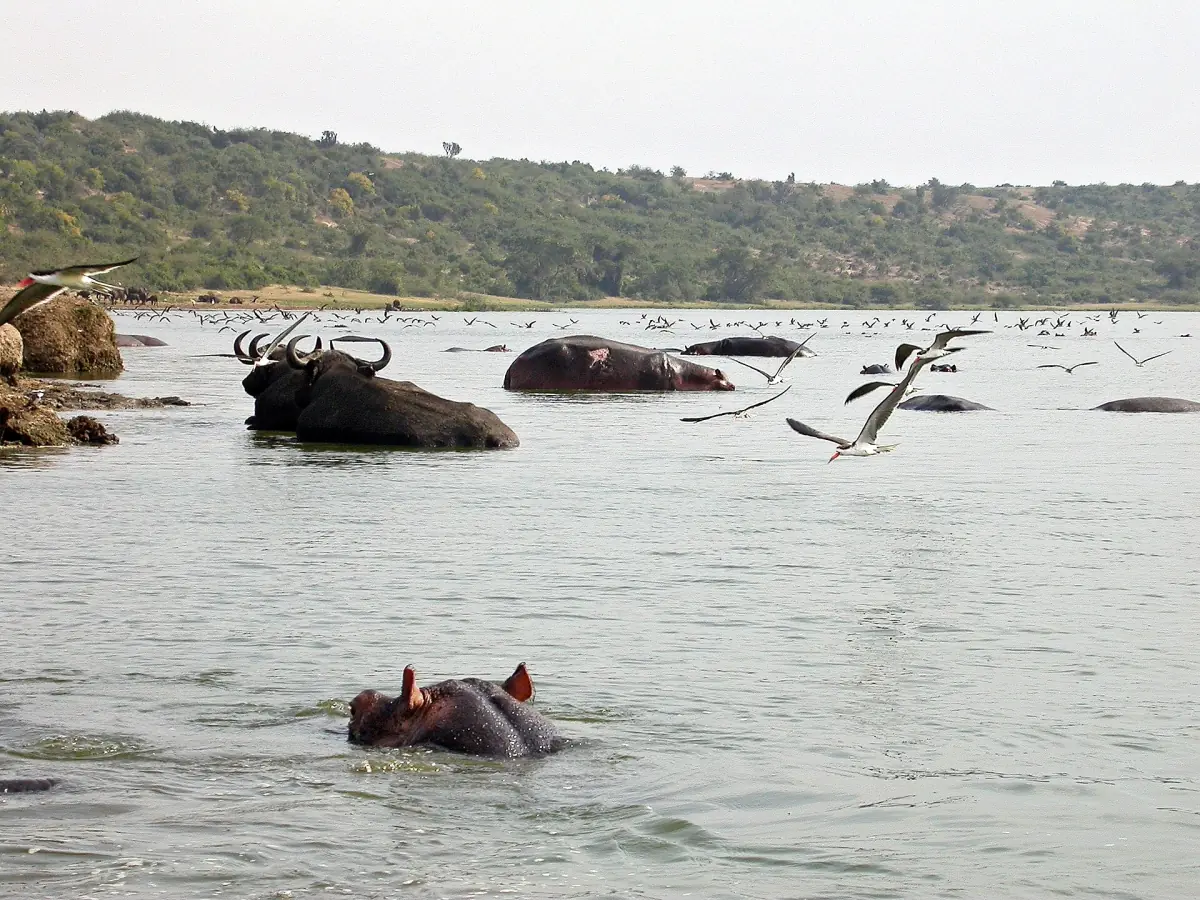
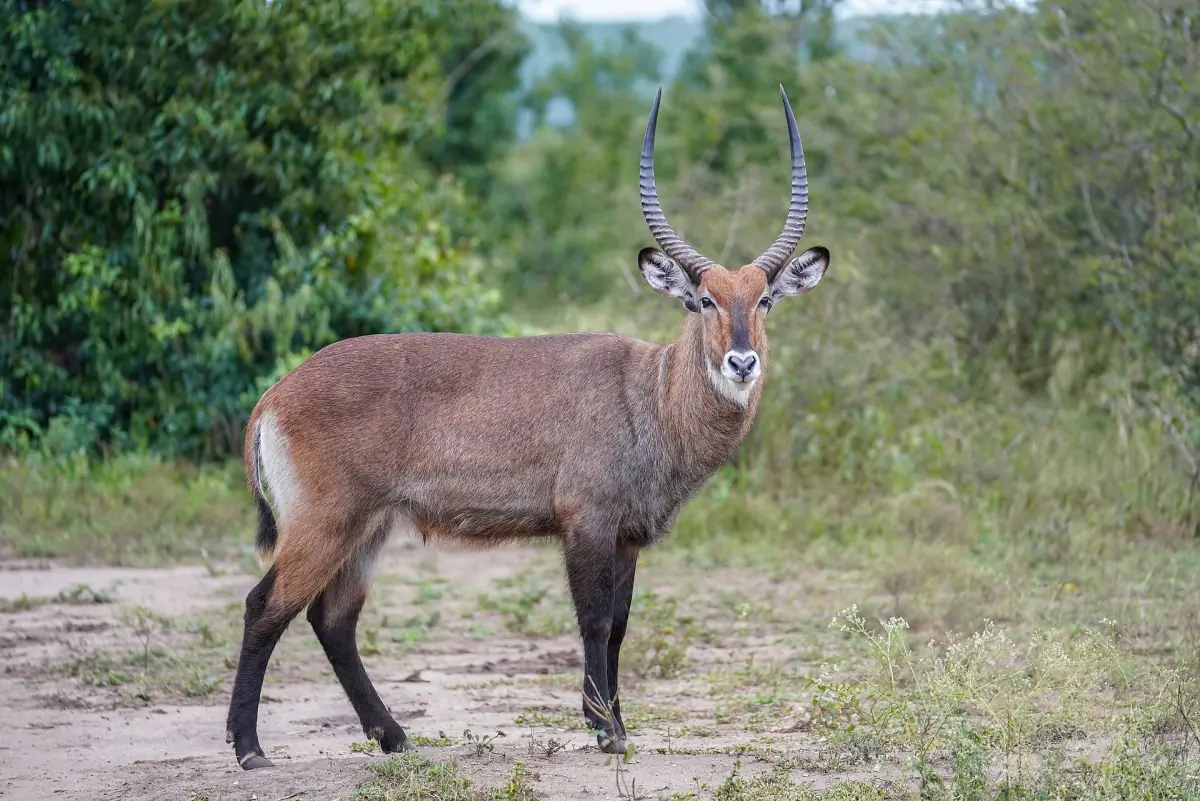
Plan for a chance, not a promise. No time of day is a safe bet for tree sightings, so ask your guide where the lions were seen in the last days. Ishasha is also one of the open game drive areas of the park, so the same morning can bring topi, Uganda kob, buffalo, elephants and hippos. Our safari guide explains how game drives work across the park.
Check the current amount before you book; tours state whether permit and park fees are included.
Our pick: a trip that includes Ishasha
This 7-day safari is one of the few listed trips that include Ishasha, together with the Kazinga Channel.
Hand-picked tours, booked through GetYourGuide. Prices are indicative starting prices in US dollars (as of October 2026). Tap a tour for live availability and the current price in your currency.
Ishasha lion tours and safaris
Game drives and multi-day safaris that include the southern sector, with live prices and availability.
Tree climbing lions in Uganda: how to look
What helps on the day.
Ask your guide first
Guides share sightings. A lion seen in a fig tree yesterday is a better lead than any map. A guide for a private vehicle costs $25 per day for foreign non-residents, or UGX 25,000 for East African citizens.
Look at the big fig trees
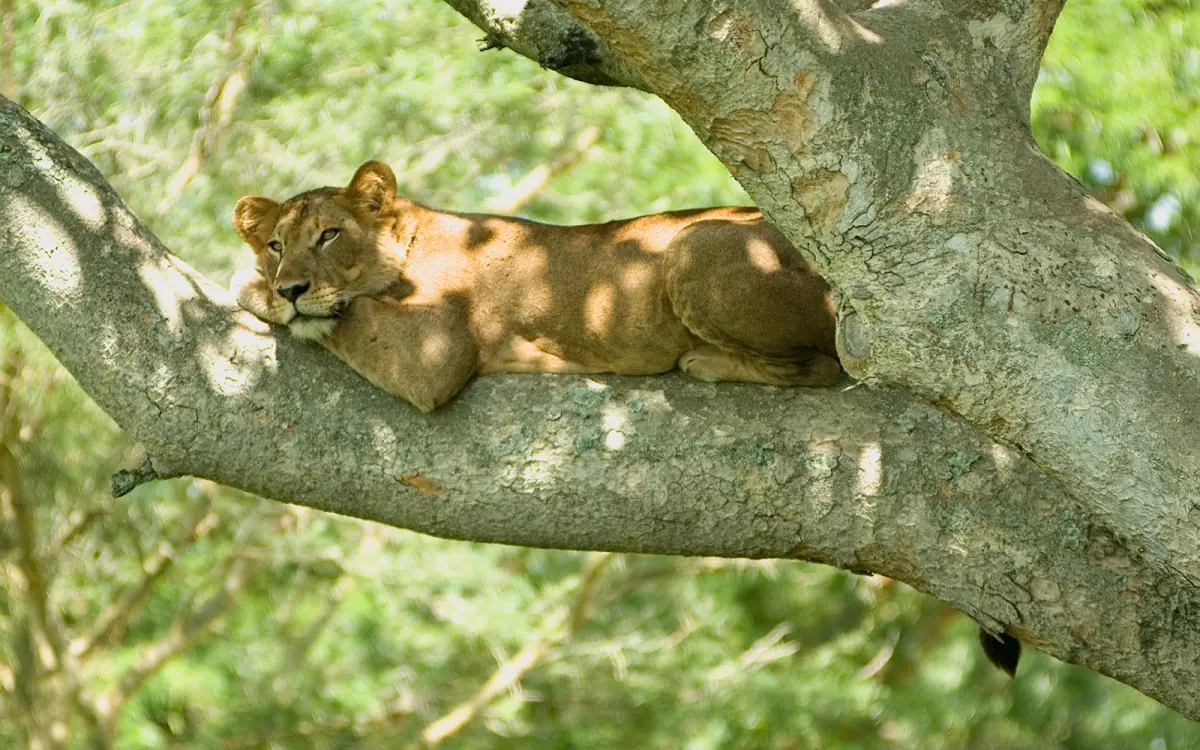
Lions use the thick branches of large fig trees to rest. Scan the crowns slowly, not only the grass below. A lioness lying along a branch can look like part of the tree.
Stay on the tracks
Park rules ask you to stay on the tracks, keep to 40 km/h and bring no pets. Camping and fires are allowed only in marked places. Do not drive off the road for a better angle.
Give it time
Sightings are not scheduled, and no time of day is a safe bet. If your itinerary allows it, plan more than one drive in the sector rather than one short visit.
How many lions are left
Lion numbers in the park have fallen. In 2018 conservationists counted fewer than 100 lions in the whole of Queen Elizabeth National Park, and 11 lions were killed near Hamukungu. In March 2021 six lions were poisoned in Ishasha. These are two separate events, and neither gives a count for today. Treat Ishasha as a place where lions live and sometimes climb, not as a place with a guaranteed pride.
The Uganda Carnivore Program runs research drives that follow lions, leopards and hyenas. They are booked through UWA at the Mweya Visitor Center or in advance by your guide, and the fee is $200 for foreign non-residents plus a $10 community contribution. No sighting is guaranteed, and a research drive does not change how wild animals behave.
Between lion searches, the plains are worth your time. Topi and Uganda kob graze in open ground, buffalo and elephants move through the bush, and hippos rest in the water. Ask your guide to stop for them: a lion drive often turns into a good general game drive.
Getting to Ishasha and moving on
The south of the park is a connection, not only a stop.
From the north of the park
Ask your lodge or driver for a realistic figure for your vehicle and season. Plan the transfer as a half day, not as a short hop. The getting there guide covers the roads and flights to the park.
Toward Bwindi
Ishasha is the link toward Buhoma, about 62 km to the south. Gorilla trekking and permits sit with the Bwindi guide: see the four Bwindi sectors.
Camping
UWA offers camping at Ishasha. Ask UWA about current spaces before you plan to sleep there.
Travel advice near the border
The German Foreign Office advises special care in Queen Elizabeth and the Rwenzori and names Ishasha separately because it lies close to the border. Ask park staff for current information, and follow the advice of your own government.
More in the park
Pair the lions with other sectors.
Ishasha and the tree climbing lions: frequently asked questions
Where are the tree climbing lions in Uganda?
In the Ishasha sector in the south of Queen Elizabeth National Park, where lions rest on fig trees.
What is the best time to see them in a tree?
No time of day is a safe bet. Ask your guide where lions were seen recently and allow more than one drive.
Do all lions in Ishasha climb trees?
No. Not all lions sit in trees all the time, and you may find them resting in the grass.
How much does it cost to visit Ishasha?
Park entry is $40 per 24 hours for an adult foreign non-resident under the UWA tariff for July 2024 to December 2026. A guide in a private vehicle adds $25 per day. Check the current amount before you book; tours state whether permit and park fees are included.
Can I combine Ishasha with Bwindi?
Yes, Ishasha is the link toward Buhoma in Bwindi. Plan the transfer time with your driver and check the current travel advice for the border area.