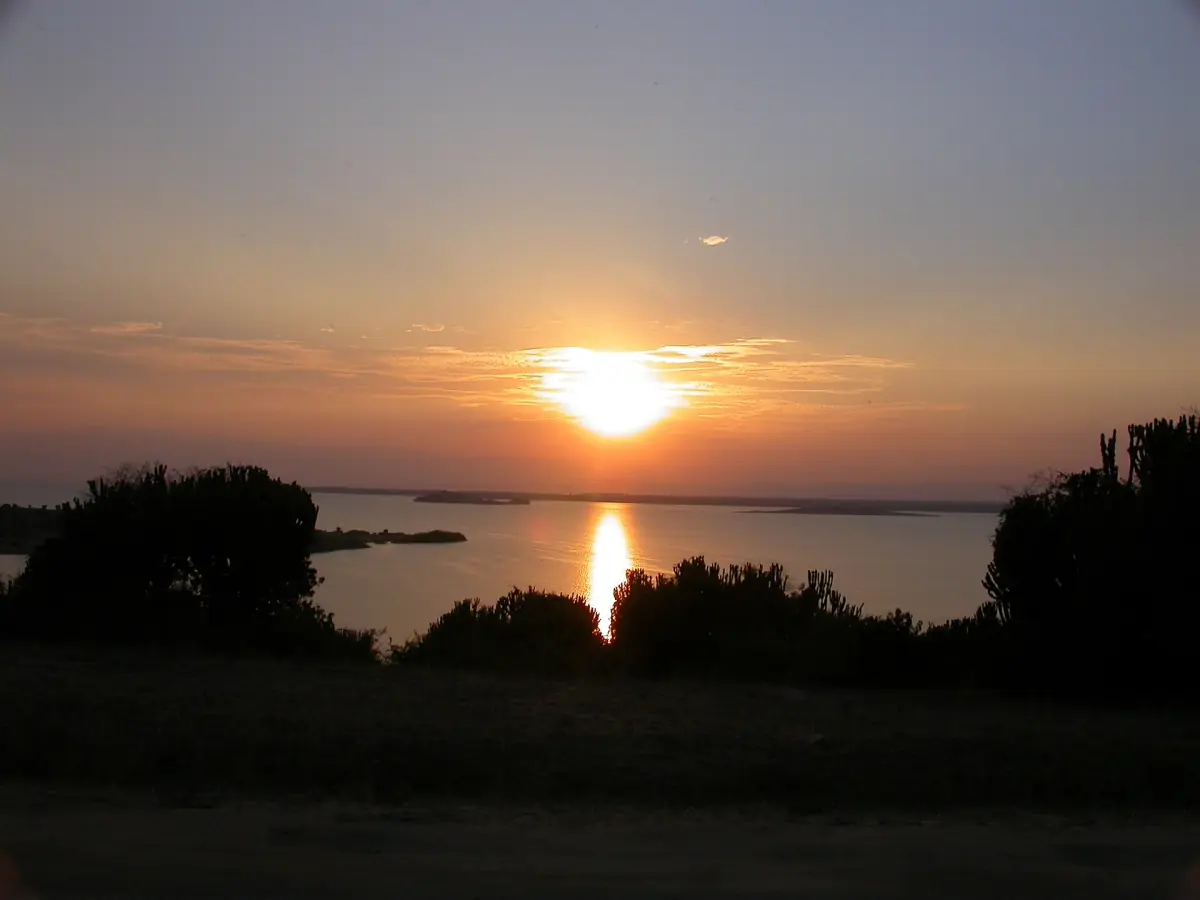
Lake Edward and Lake George: the lakes of the park
Lake Edward and Lake George are the two big lakes of Queen Elizabeth National Park, and the Kazinga Channel links them. Lake Edward is the larger one and a border lake between Uganda and the DR Congo. Its shore in the park lies at about 910 m above sea level.
Lake Edward covers roughly 2,300 km² and Lake George roughly 250 km². What matters for a visit is how you meet the lakes: from a boat on the channel, from a shore road, or from a village landing. The Kazinga Channel guide explains the boat cruise, which is the easiest way to see the water.
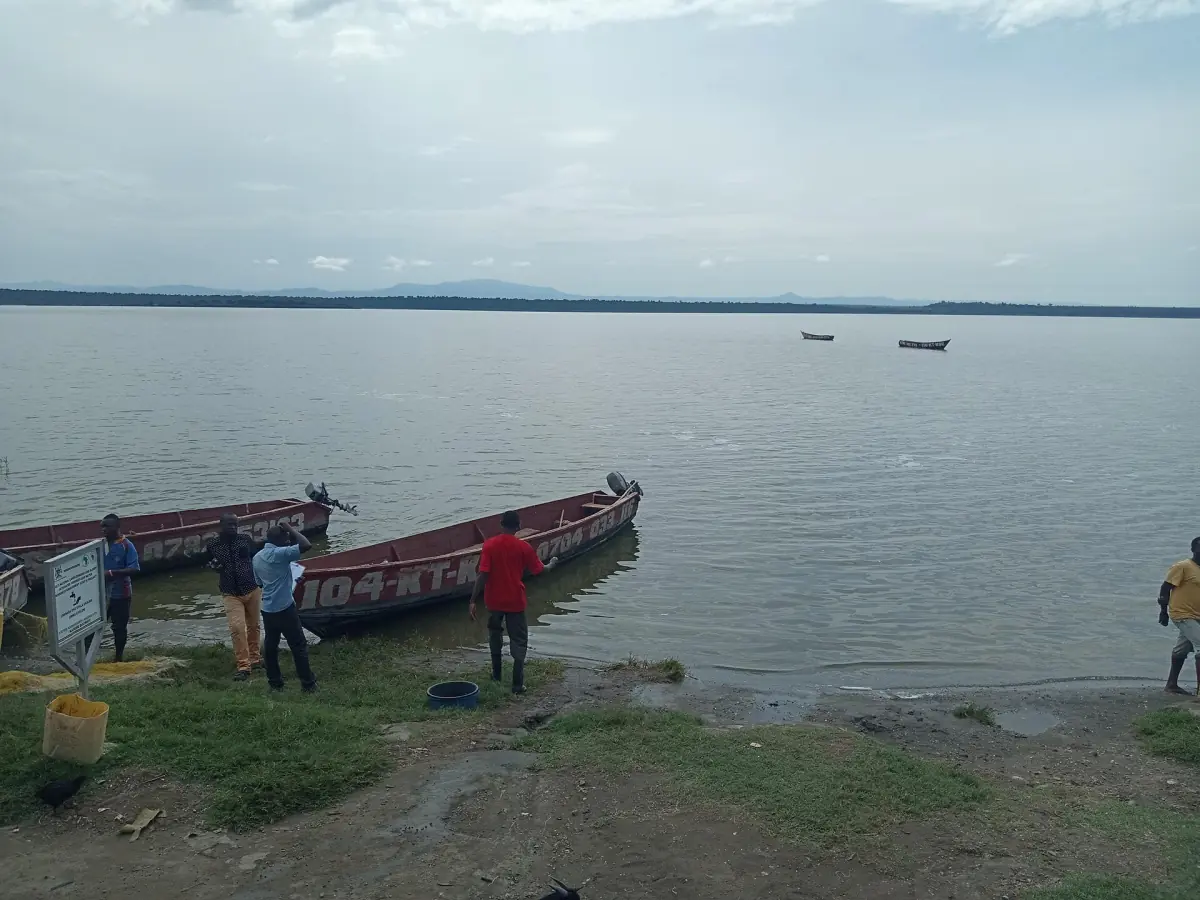
Our pick: a game drive around Mweya
This game drive covers Mweya, the peninsula between Lake Edward and the Kazinga Channel.
Hand-picked tours, booked through GetYourGuide. Prices are indicative starting prices in US dollars (as of October 2026). Tap a tour for live availability and the current price in your currency.
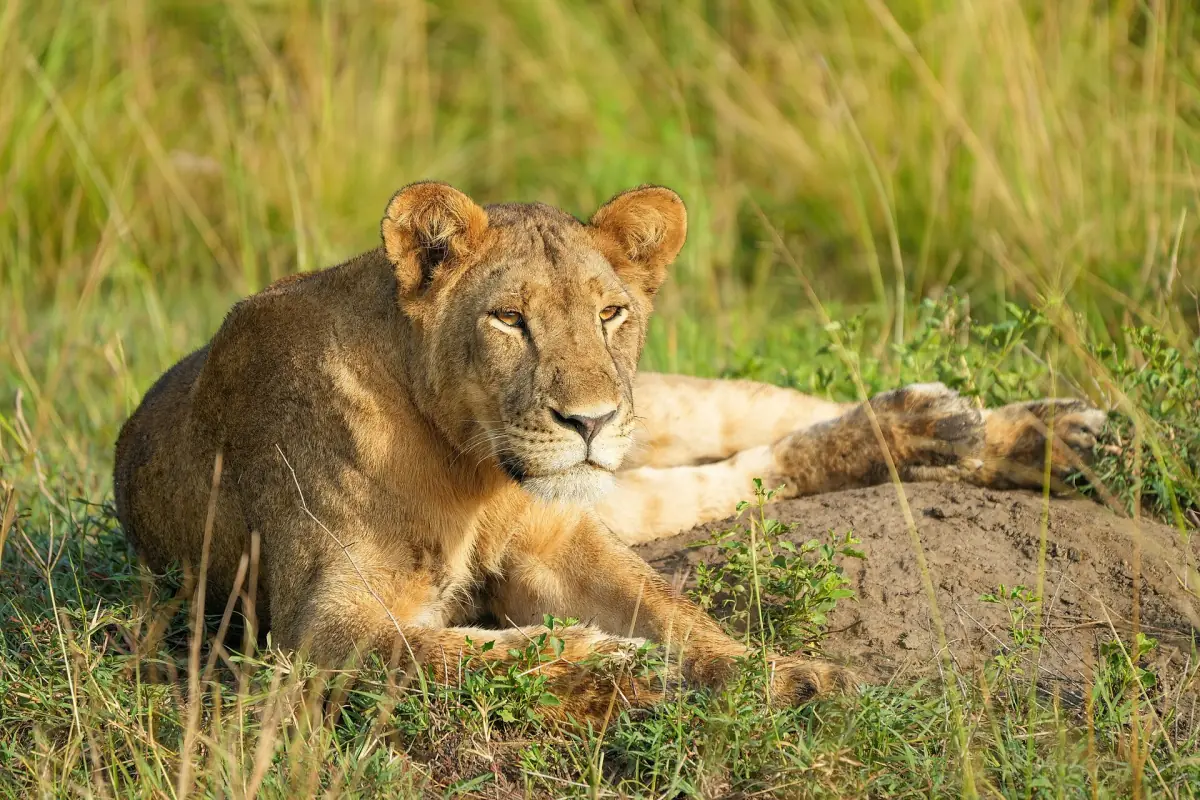
Lakes, channel and safari tours
Boat trips and safaris in Queen Elizabeth National Park, with live prices and availability.
Lake George, Uganda: a wetland of international importance
The wetland is bigger than a single lake view.
Ramsar site
Lake George is Ramsar site number 394, designated on 4 March 1988 with an area of 15,000 ha. The figure covers the wetland complex, not the whole water surface of the lake.
Rivers, swamp and waterbirds
Rivers from the Rwenzori mountains feed the wetland, swamp habitats line it and waterbirds from the Palearctic winter here. In winter months in Europe, birds that breed in the north spend time here.
Montreux Record
The site has been on the Montreux Record since 4 July 1990. That list flags wetlands under ecological pressure, and mining and farming are among the pressures on Lake George.
Water quality
Do not treat the lakes as swimming water. Hippos and crocodiles live there, and no safe bathing spot is known. Treat the water as a habitat, not as a beach.
Fishing villages around the lakes
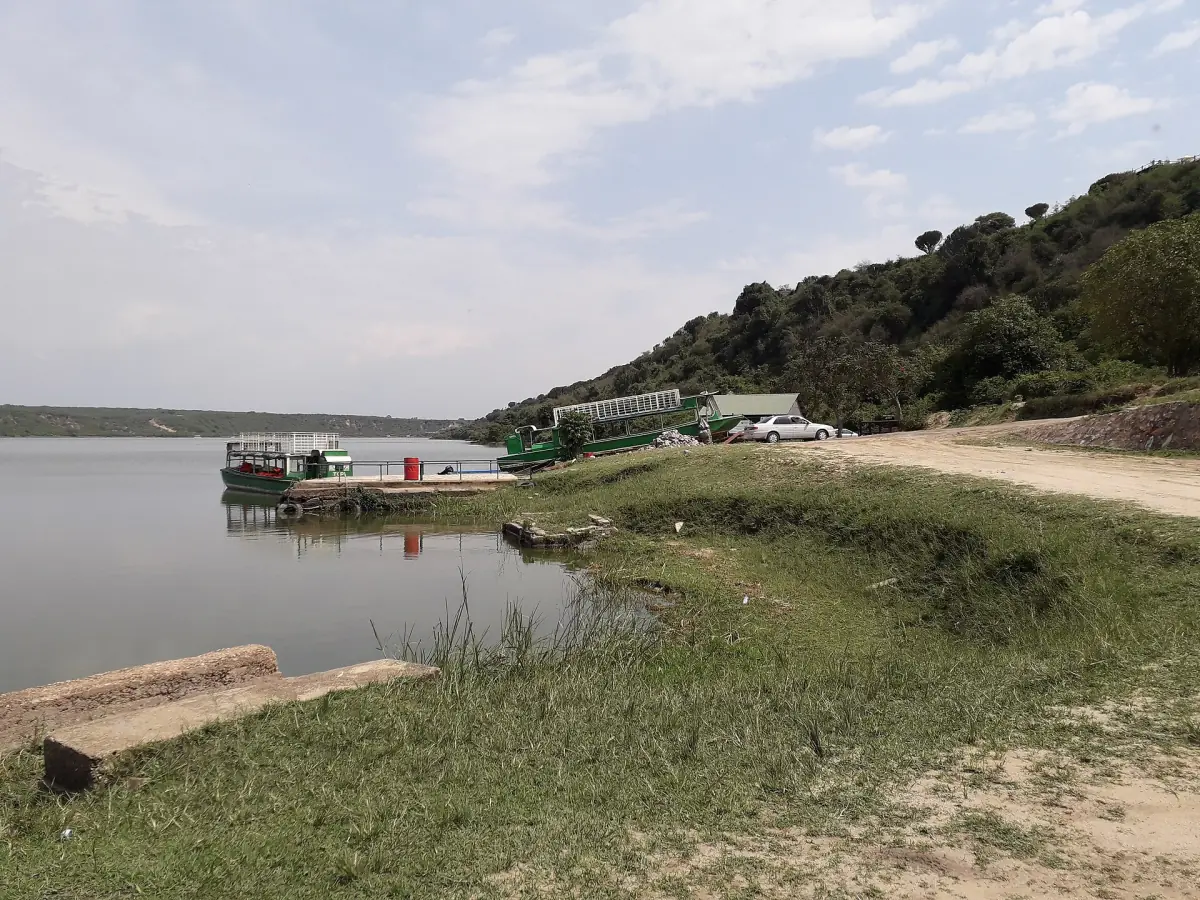
UNESCO names fishing and salt extraction as important livelihoods in the settlements of the biosphere reserve. Communities around the park include Kasenyi, Katunguru, Hamukungu, Katwe and Kazinga. The number of settlements changes over time.
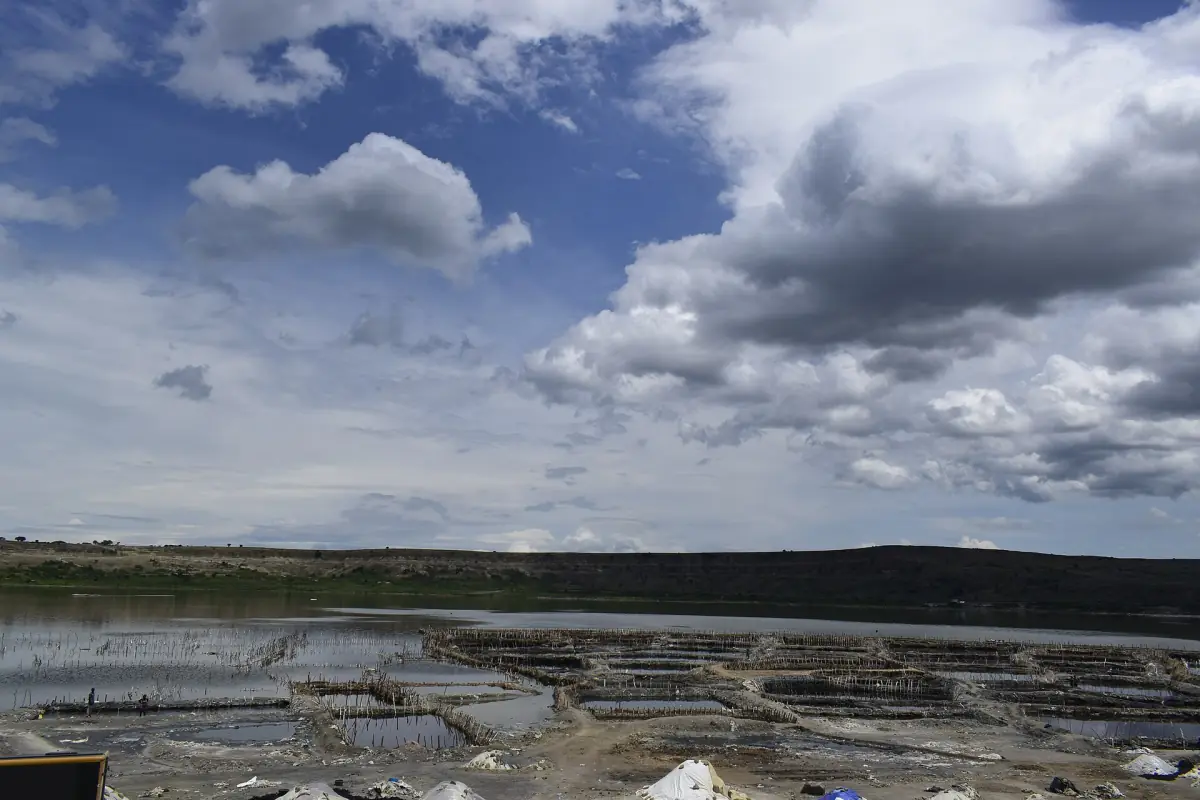
Treat these as places where people live and work, not as stops on a sightseeing list. Do not turn up at a landing site unannounced. Ask UWA staff or your guide first about access, and about whether the community welcomes visitors that day. Ask before you photograph people or boats, and expect a fee for a guide if one is offered. For the salt side of the shore economy, see the Lake Katwe guide.
Birds and wildlife on the water
What the lakes add to a game drive.
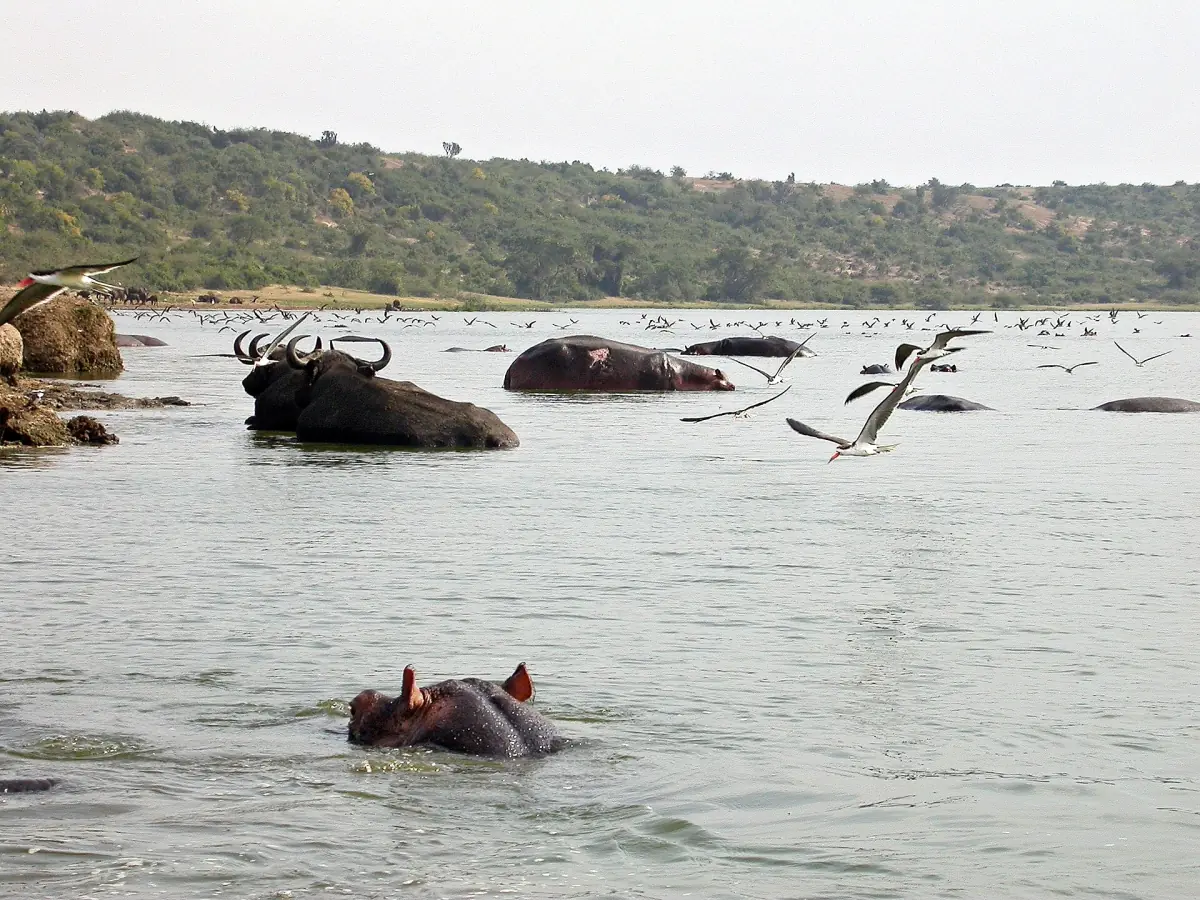
Waterbirds
The biosphere reserve has resident and migratory species, and the park has more than 600 bird species in total. A long list is no guarantee for one stop. Do not plan around a single species such as the shoebill or flamingos.
Hippos and crocodiles
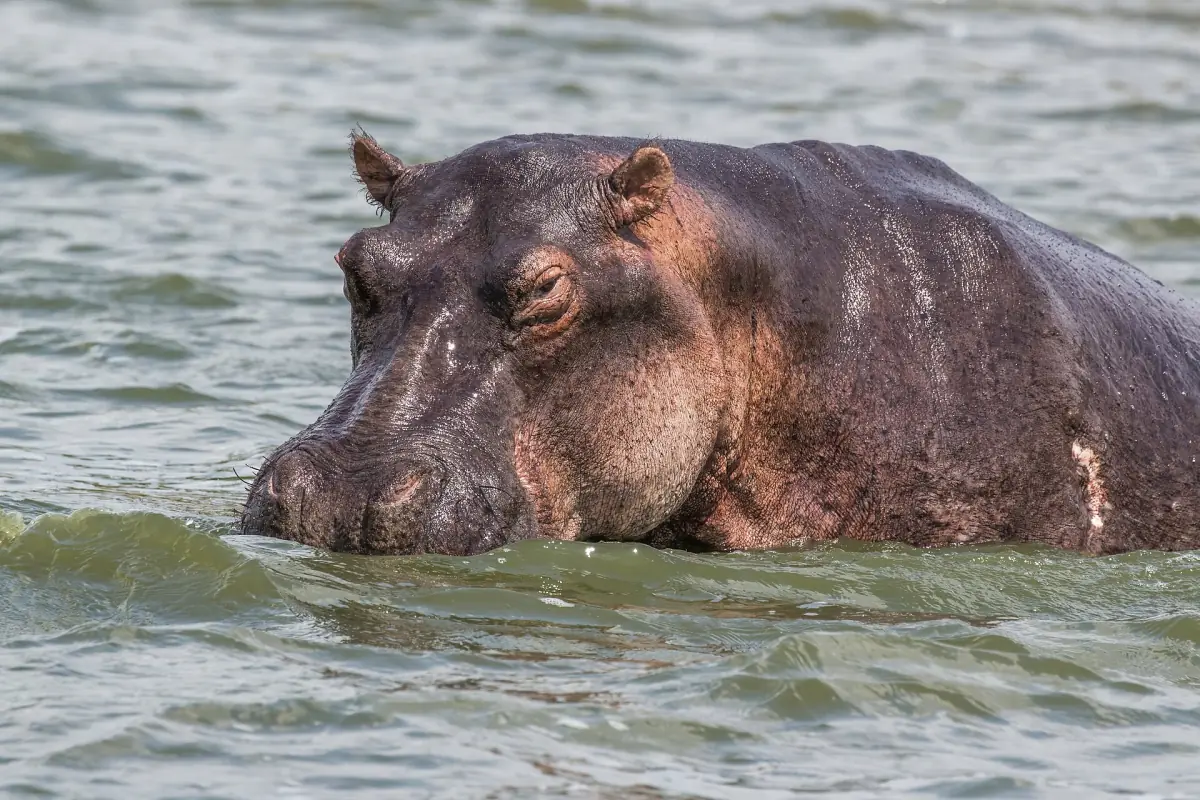
Hippos and crocodiles live in the channel and along the lake shores. They are the reason not to swim. Stay at a safe distance from the water's edge on foot, and listen to your guide.
Seeing the lakes from Mweya
Mweya is the peninsula between the channel and Lake Edward, and there is a marina and a Visitor Information Centre there. It is the usual starting point for a look at the water. Ask there about boat departures and about current conditions on the shore roads before you plan a longer lake day.
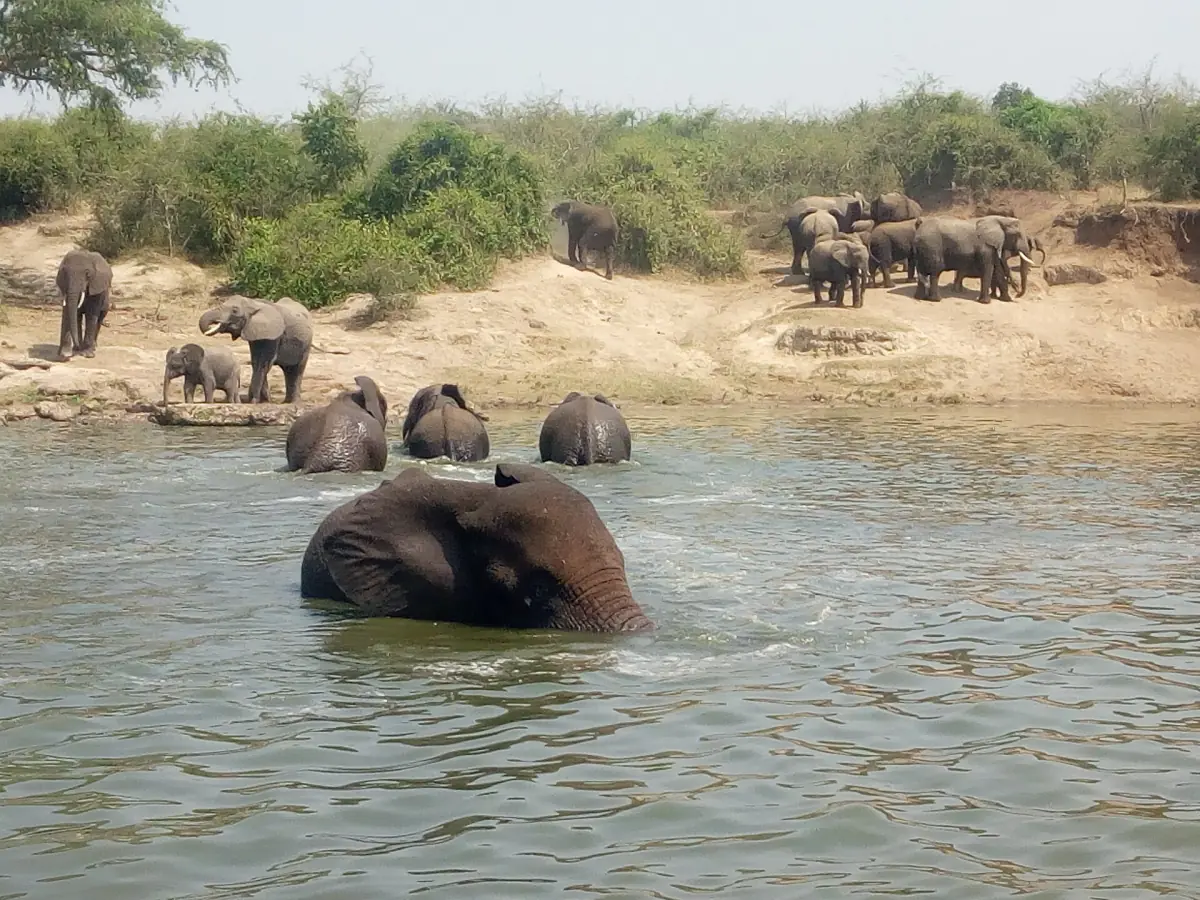
Elephants at the shore
Hippos, crocodiles, elephants, buffalo and waterbirds live along the channel. Elephants may come to drink and bathe on the sandy shore. A boat cruise can bring several of them into one outing, but no sighting is promised.
Border lake: what to know
Lake Edward is shared with the DR Congo.
Do not plan a boat trip toward the Congolese side without separate legal and security advice. The German Foreign Office advises against non-essential travel into the Congolese border area within 20 km, and advises special care in Queen Elizabeth and the Rwenzori. The warning for the Congolese side is not the same as a ban on visiting the park. Ask park staff for current information, and follow the advice of your own government.
Another of Uganda's western rift lakes, Lake Albert, has its own guide at Murchison Falls.

Lake Edward and Lake George: frequently asked questions
Are Lake Edward and Lake George connected?
Yes. The Kazinga Channel links the two lakes.
Which lake is bigger?
Lake Edward. Lake Edward covers roughly 2,300 km² and Lake George roughly 250 km².
Can I swim in the lakes?
Do not swim. Hippos and crocodiles live in the water, and no safe bathing spot is known, so treat the lakes as wildlife habitat.
Can I visit the fishing villages?
Not freely. Ask UWA staff or your guide first about access to a landing site, and ask people before you photograph them.
What birds can I see?
The park has more than 600 bird species, and Lake George is a wintering ground for waterbirds. Sightings depend on the day and the season.