Animals of Queen Elizabeth National Park
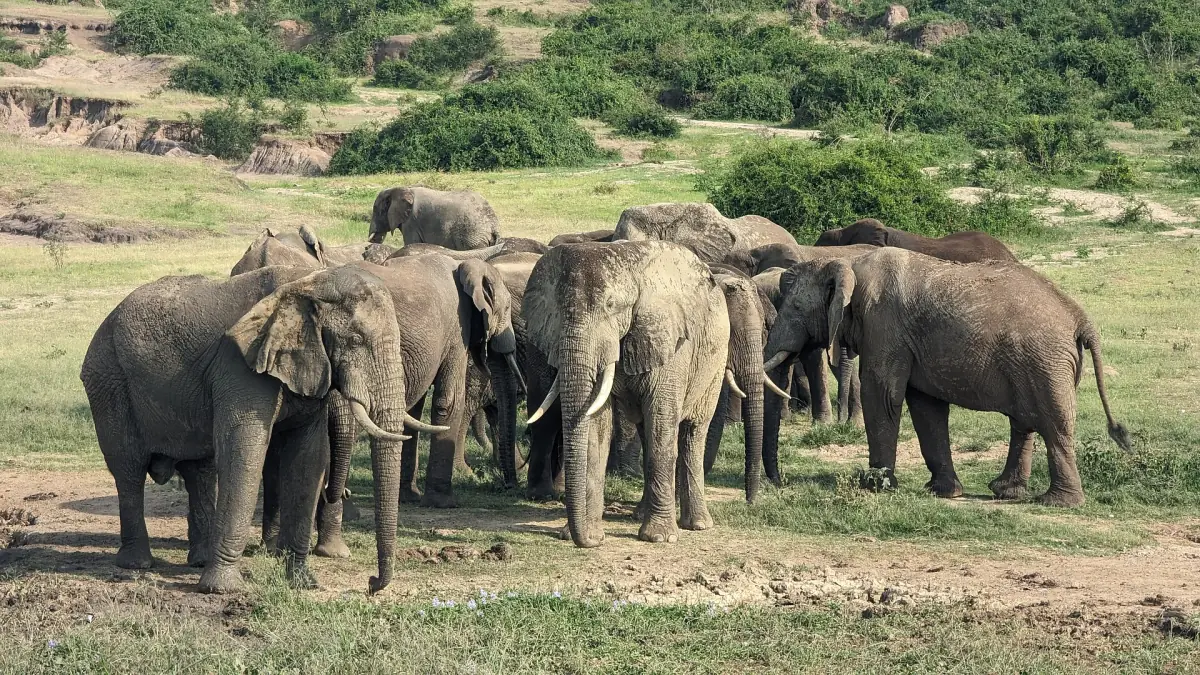
The park has more than 95 mammal species and more than 600 bird species. That is an inventory of what occurs here, not a number of animals you will see on one trip. Lions, leopards, elephants, buffalo, hippos, Uganda kob, topi, waterbuck, warthogs, giant forest hogs and hyenas all live in the area.
Four of the Big Five live here: lion, leopard, elephant and buffalo. There is no rhino to see. The sections below cover the groups visitors ask about most. For ways to see them, read the safari page and the Kazinga Channel page.
Where to look for which animals
Habitats help more than a checklist.
| Animals | Where visitors look | Page |
|---|---|---|
| Elephants, buffalo, Uganda kob, hyenas | Open plains on game drives | Safari |
| Hippos, crocodiles, waterbirds | The Kazinga Channel from a boat | Kazinga Channel |
| Lions that climb fig trees | The Ishasha sector in the south | Ishasha |
| Chimpanzees | Kyambura Gorge with a permit | Kyambura |
| Monkeys and forest birds | Maramagambo forest on guided walks | Maramagambo |
For most visitors, a day drive in the morning and the boat in the afternoon show the widest range. Add Ishasha or Kyambura if the lions or chimpanzees are your main reason to come.
Our pick: game drives and a boat ride
This 3-day trip has game drives and the Kazinga cruise, which are the two main ways to see wildlife in the park.
Hand-picked tours, booked through GetYourGuide. Prices are indicative starting prices in US dollars (as of October 2026). Tap a tour for live availability and the current price in your currency.
Queen Elizabeth wildlife tours
Game drives, boat cruises and wildlife safaris in the park, with live prices and availability.
Uganda lions in Queen Elizabeth
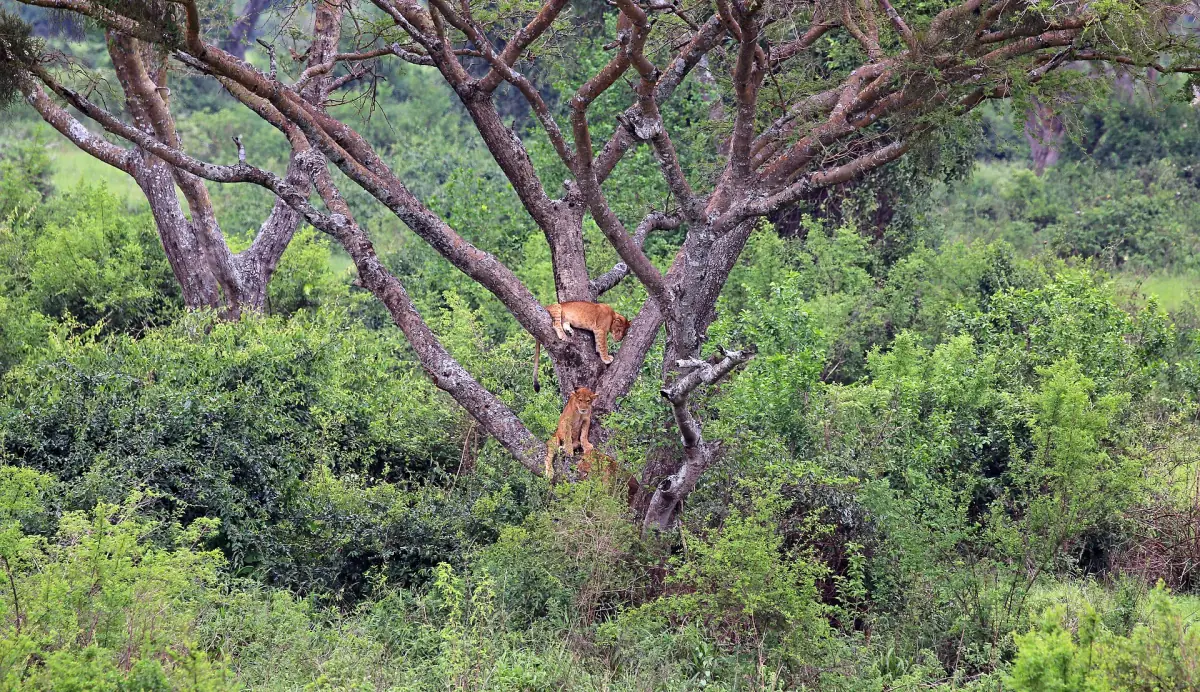
Lions live in the park, and Ishasha is known for lions resting in the branches of fig trees. Not all lions climb, and no time of day is a safe bet. Lion numbers have been under pressure. In 2018 fewer than 100 lions were counted in the whole park, and 11 were killed at Hamukungu. In March 2021 six lions were poisoned in Ishasha. These are separate events, and they are not a count for today.
Leopards and hyenas also live in the park. A leopard or hyena sighting is a lucky find, not a promise. A carnivore research drive, at $200 for a foreign non-resident, spends a longer time on these animals. See park fees.
Elephants, buffalo, hippos and antelopes
The animals you meet most often.
Elephants
Elephants live in the park and can be seen on the plains and along the channel. Keep your distance and stay in the vehicle.
Buffalo
Buffalo graze in herds on the plains and come to the water. Oxpeckers often ride on them.
Hippos
Hippos live in the Kazinga Channel. The channel is not safe for swimming.
Uganda kob, topi and waterbuck
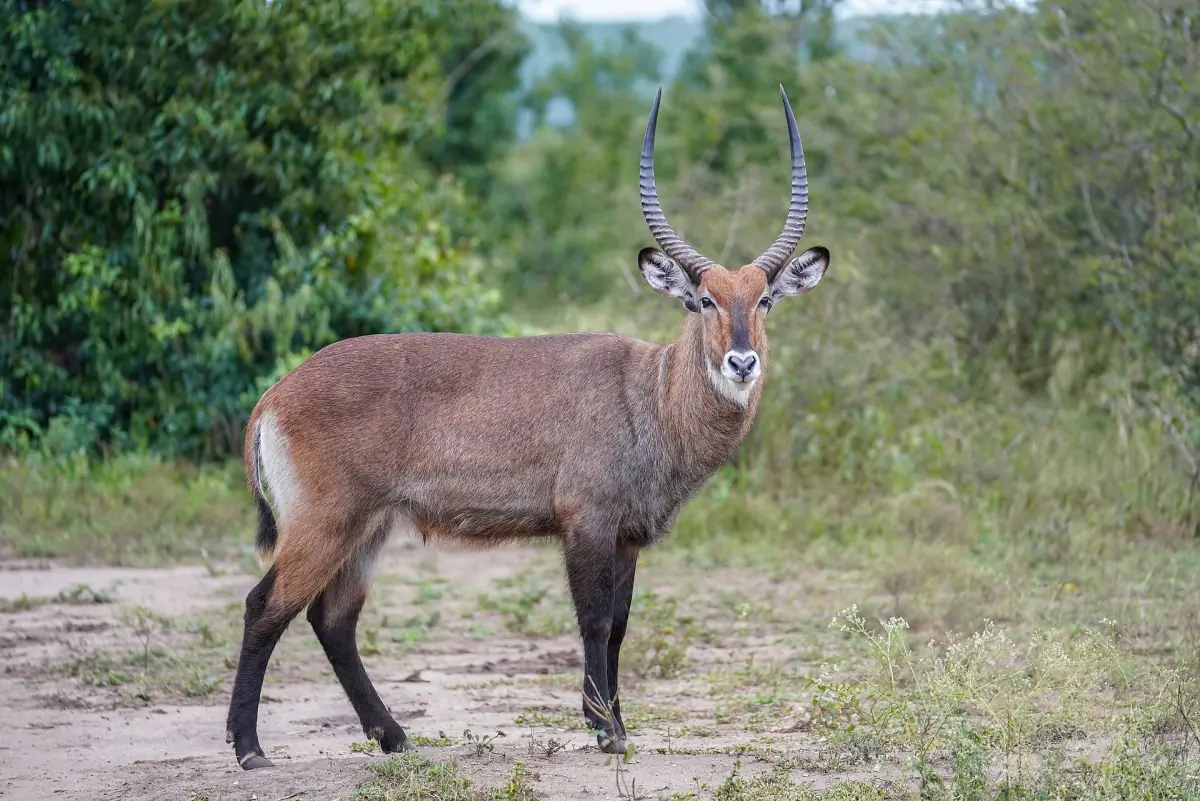
Uganda kob and topi are antelopes of the open ground, and the waterbuck stays near water. These are the animals visitors often see first on a game drive.
Primates
Chimpanzees, black-and-white colobus monkeys, vervet monkeys and olive baboons live in the park. The chimpanzees of Kyambura Gorge can be tracked with a permit, and a monitoring project had identified 25 individuals there by July 2026. That is not a total population and no promise of a sighting. See Kyambura Gorge.
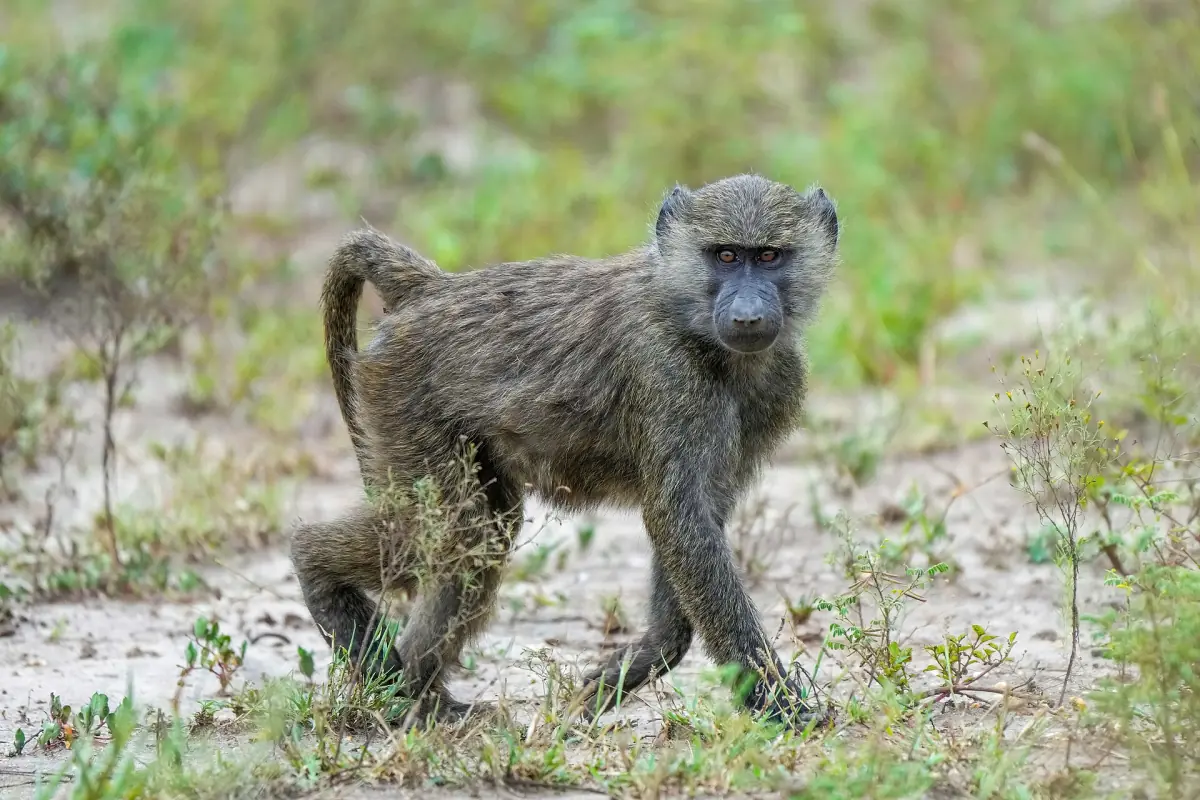
Baboons are among the primates you can meet. Treat them as wild animals, keep food out of sight and do not feed them.
Birds
Resident and migratory species.
Resident and migratory birds live in the area, and Lake George is a wetland where migratory waterbirds spend the winter. A boat on the channel is a good place to see waterbirds. A long bird list is no guarantee, so do not plan a trip around one species such as the shoebill or flamingos at a single stop. A guide helps you find what is around that day.
How to behave around the animals
A few rules that protect you and them.
Stay inside the vehicle on game drives, keep to the tracks and do not feed any animal. The water holds hippos and crocodiles, so do not swim. For chimpanzee tracking the rules are a minimum age of 12, a distance of 10 meters, a maximum of one hour with the animals, no flash and no participation when you are ill. Follow the briefing on the day.
Queen Elizabeth wildlife: frequently asked questions
Which animals live in Queen Elizabeth National Park?
Lions, leopards, elephants, buffalo, hippos, Uganda kob, topi, waterbuck, warthogs, giant forest hogs and hyenas, plus chimpanzees and other primates. The park has more than 95 mammal species and more than 600 bird species.
Are there rhinos?
No. Four of the Big Five live here: lion, leopard, elephant and buffalo. There is no rhino viewing in the park.
Will I see tree-climbing lions?
You may, but there is no guarantee. Ishasha is the best known area, and not all lions climb trees. The Ishasha page explains what to expect.
Can I see gorillas in the park?
No. Gorillas live in other national parks, such as Bwindi. The tours page shows how to combine Queen Elizabeth with other parks.
How do I see the most wildlife?
Combine a guided game drive with the Kazinga Channel cruise. Early morning and late afternoon give softer light, and a guide knows where animals were seen.